Zapier review
No-code automation connecting thousands of apps, now with AI.
WireTensors rating
Time saved: ~3–5 hours/week on repetitive cross-app tasks.
Key facts
| Tool | Zapier |
|---|---|
| Category | AI Agents |
| Pricing | Free; Professional from ~$20/mo; Team from ~$69/mo |
| Free tier | Yes |
| WireTensors rating | 4.4 / 5 |
| Best for | Non-technical teams automating across many SaaS apps |
| Avoid if | You need low-cost, high-volume or self-hosted automation |
| Affiliate commission | 25% recurring (PLACEHOLDER — pending affiliate approval) |
| Cookie window | N/A |
| Last verified | 2026-06-25 |
Overview
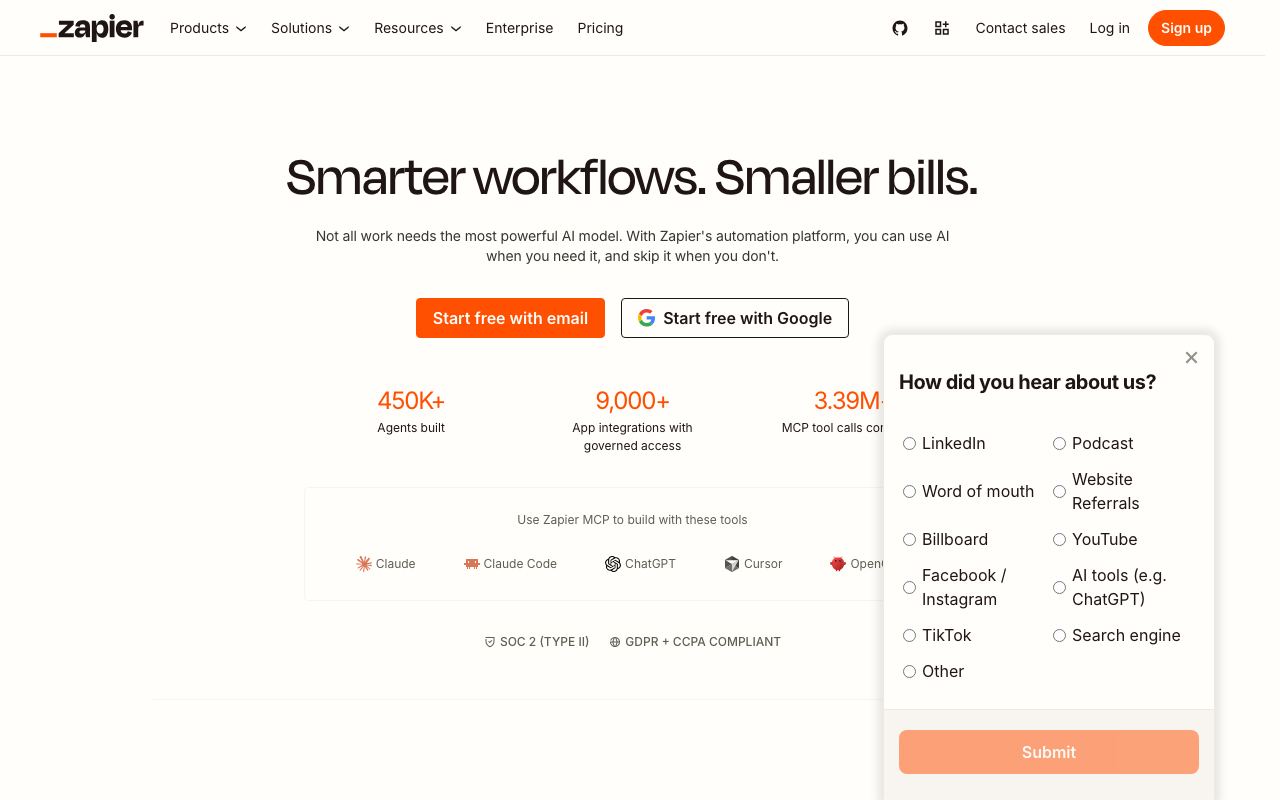
Zapier is the most widely used no-code automation platform, connecting thousands of apps so non-technical users can build workflows (“Zaps”) that move data and trigger actions automatically. It has added AI capabilities, including AI-assisted Zap building and AI agents, to make automations smarter. Its strengths are an unmatched integration catalogue and ease of use; its main drawback is task-based pricing that can rise with volume. It competes with Make and n8n, trading lower-level control for breadth and simplicity.
Pros
- Largest app ecosystem (7,000+ integrations)
- Easy to start with no code
- AI features and agents for smarter automations
Cons
- Task-based pricing can climb with volume
- Complex multi-step flows get pricey
- Less control than developer tools
Who it is for
- Best for: Non-technical teams automating across many SaaS apps.
- Avoid if: You need low-cost, high-volume or self-hosted automation.
Who this is for
Operations, marketing and sales staff who want to connect their SaaS stack and automate busywork without writing code.
Who should skip this
High-volume or cost-sensitive users, and developers who want self-hosted control.
Verdict
The default no-code automation tool for breadth and ease; watch task-based costs at scale.
User reviews
Real reader reviews — separate from WireTensors' own editorial rating above. Every submission is moderated before it appears here.
Loading reviews…
Write a review
Zapier FAQ
What is Zapier? +
Zapier is the most widely used no-code automation platform, connecting thousands of apps so non-technical users can build workflows (“Zaps”) that move data and trigger actions automatically. It has added AI capabilities, including AI-assisted Zap building and AI agents, to make automations smarter. Its strengths are an unmatched integration catalogue and ease of use; its main drawback is task-based pricing that can rise with volume. It competes with Make and n8n, trading lower-level control for breadth and simplicity.
How much does Zapier cost? +
Zapier pricing: Free; Professional from ~$20/mo; Team from ~$69/mo. Always confirm current pricing on the official site, as plans change.
Does Zapier have a free tier? +
Yes. Zapier offers a free plan or free credits you can use to evaluate it.
What is Zapier best for? +
Non-technical teams automating across many SaaS apps.
When should you avoid Zapier? +
Avoid Zapier if: You need low-cost, high-volume or self-hosted automation.
What are the main pros of Zapier? +
Largest app ecosystem (7,000+ integrations); Easy to start with no code; AI features and agents for smarter automations.
What are the main cons of Zapier? +
Task-based pricing can climb with volume; Complex multi-step flows get pricey; Less control than developer tools.
Does Zapier have an affiliate program? +
Yes. Zapier runs an affiliate or partner program (commission: 25% recurring (PLACEHOLDER — pending affiliate approval)). WireTensors may earn a commission from qualifying links at no extra cost to you.
How is Zapier rated? +
WireTensors rates Zapier 4.4 out of 5, based on capability, value, and fit for its intended use case.
What category does Zapier fall under? +
Zapier is categorised under ai-agents on WireTensors.
When was this Zapier review last verified? +
This review was last verified on 2026-06-25 against the vendor's official site.
Reviewed by Arjun Mehta
Editorial lead overseeing WireTensors' research, sourcing and verification process
Last verified:
Sources
- Zapier — official website — verified
- Zapier — affiliate/partner program — verified