Langkast review
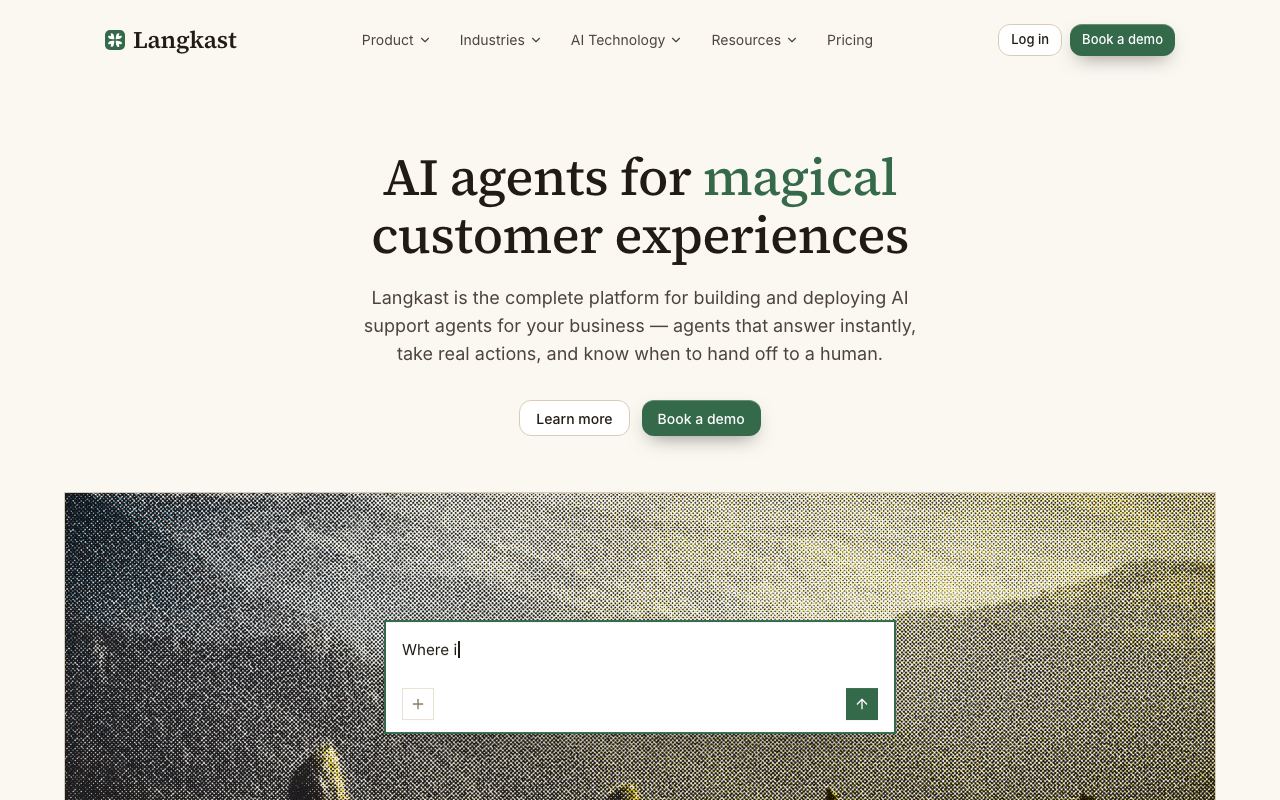
A unified workspace that centralises multiple AI models, agents, and file management in a single interface.
WireTensors rating
Time saved: Saves approximately 2–3 hours per week on context switching and account management for teams using three or more AI services actively..
Key facts
| Tool | Langkast |
|---|---|
| Category | Productivity |
| Pricing | Pricing not publicly listed at time of review |
| Free tier | Yes |
| WireTensors rating | 3.8 / 5 |
| Best for | Teams and freelancers who regularly switch between multiple AI models and want a single workspace to compare outputs, consolidate documents, and reduce context-switching overhead. |
| Avoid if | You require guaranteed model freshness, latency-sensitive applications, or direct control over API costs without intermediary markup; cost-conscious users should calculate direct API pricing versus Langkast's terms first. |
| Affiliate commission | Pending affiliate program review |
| Cookie window | N/A |
| Last verified | 2026-08-11 |
Overview
Langkast is a unified workspace and aggregation platform that centralises access to multiple AI models, agents, and file management capabilities under a single interface. Launched on Hacker News Show HN in August 2026, Langkast addresses fragmentation pain: users who rely on ChatGPT, Claude, Gemini, and open-source models often maintain separate browser tabs, account credentials, and subscription tiers, making it difficult to compare outputs or maintain a coherent project context. Langkast's core proposition is consolidation: the tool claims to support multiple AI models within a single workspace, alongside document upload and management, allowing users to prompt different models with the same input and compare responses without leaving the application. The underlying architecture appears to be a wrapper around existing third-party APIs, likely integrating with OpenAI, Anthropic, and other providers via published SDKs or APIs. Key technical details remain undisclosed: the platform has not published a comprehensive list of supported models, update frequency, or backend architecture. This opacity makes it difficult to assess whether Langkast adds algorithmic value or merely provides UI convenience. Pricing is similarly unconfirmed; no public rate card exists, suggesting either a free-tier model with premium features, or a per-API-call passthrough with Langkast's commission. For users managing large documents or repetitive multi-model testing, Langkast could reduce friction. However, without transparency on cost, latency, and supported models, adoption risk is moderate. Common use cases likely include competitive analysis (prompting multiple models with the same query), document-heavy workflows (uploading once, accessing across tools), and team collaboration (shared workspaces for prompting). Compared to using separate browser tabs and native apps, Langkast trades some vendor independence for UI efficiency. Its clearest limitation is dependency on third-party APIs: if a user's preferred model is not supported, or if Langkast's uptime differs from native platforms, productivity gains evaporate.
Pros
- Aggregates multiple AI models and agents in one workspace, eliminating context switching between ChatGPT, Claude, and other tools
- Integrated file management allows direct upload and processing of documents without manual copy-pasting between applications
- Lower barrier to entry for teams evaluating different AI models simultaneously without maintaining separate accounts and subscriptions
Cons
- Lacks published information on supported models, model freshness, and update frequency relative to first-party providers
- Unclear whether the tool adds novel capabilities or merely wraps existing API calls, potentially introducing latency and cost overhead
- No transparent pricing model or token-counting disclosure makes it difficult to assess true cost compared to direct API usage
Who it is for
- Best for: Teams and freelancers who regularly switch between multiple AI models and want a single workspace to compare outputs, consolidate documents, and reduce context-switching overhead..
- Avoid if: You require guaranteed model freshness, latency-sensitive applications, or direct control over API costs without intermediary markup; cost-conscious users should calculate direct API pricing versus Langkast's terms first..
Who this is for
Langkast is designed for AI practitioners, researchers, and product teams who experiment with multiple models and need a unified dashboard. It suits freelance writers and consultants managing client documents alongside AI-assisted analysis, as well as early-stage teams without budget for separate subscriptions to each AI provider's premium tier.
Who should skip this
Users requiring production-grade latency guarantees, organisations with strict API cost controls, and teams already deeply integrated into a single vendor's ecosystem should skip this tool. It is also unsuitable for applications requiring transparent, guaranteed data handling and compliance reporting.
Verdict
Langkast is a plausible efficiency tool for teams actively juggling multiple AI services, but its opaque pricing, unverified API support, and lack of differentiation beyond UI aggregation limit its appeal. Early adopters should confirm supported models and true costs before committing to team workflows.
User reviews
Real reader reviews — separate from WireTensors' own editorial rating above. Every submission is moderated before it appears here.
Loading reviews…
Write a review
Langkast FAQ
What is Langkast? +
Langkast is a unified workspace and aggregation platform that centralises access to multiple AI models, agents, and file management capabilities under a single interface. Launched on Hacker News Show HN in August 2026, Langkast addresses fragmentation pain: users who rely on ChatGPT, Claude, Gemini, and open-source models often maintain separate browser tabs, account credentials, and subscription tiers, making it difficult to compare outputs or maintain a coherent project context. Langkast's core proposition is consolidation: the tool claims to support multiple AI models within a single workspace, alongside document upload and management, allowing users to prompt different models with the same input and compare responses without leaving the application. The underlying architecture appears to be a wrapper around existing third-party APIs, likely integrating with OpenAI, Anthropic, and other providers via published SDKs or APIs. Key technical details remain undisclosed: the platform has not published a comprehensive list of supported models, update frequency, or backend architecture. This opacity makes it difficult to assess whether Langkast adds algorithmic value or merely provides UI convenience. Pricing is similarly unconfirmed; no public rate card exists, suggesting either a free-tier model with premium features, or a per-API-call passthrough with Langkast's commission. For users managing large documents or repetitive multi-model testing, Langkast could reduce friction. However, without transparency on cost, latency, and supported models, adoption risk is moderate. Common use cases likely include competitive analysis (prompting multiple models with the same query), document-heavy workflows (uploading once, accessing across tools), and team collaboration (shared workspaces for prompting). Compared to using separate browser tabs and native apps, Langkast trades some vendor independence for UI efficiency. Its clearest limitation is dependency on third-party APIs: if a user's preferred model is not supported, or if Langkast's uptime differs from native platforms, productivity gains evaporate.
How much does Langkast cost? +
Langkast pricing: Pricing not publicly listed at time of review. Always confirm current pricing on the official site, as plans change.
Does Langkast have a free tier? +
Yes. Langkast offers a free plan or free credits you can use to evaluate it.
What is Langkast best for? +
Teams and freelancers who regularly switch between multiple AI models and want a single workspace to compare outputs, consolidate documents, and reduce context-switching overhead..
When should you avoid Langkast? +
Avoid Langkast if: You require guaranteed model freshness, latency-sensitive applications, or direct control over API costs without intermediary markup; cost-conscious users should calculate direct API pricing versus Langkast's terms first..
What are the main pros of Langkast? +
Aggregates multiple AI models and agents in one workspace, eliminating context switching between ChatGPT, Claude, and other tools; Integrated file management allows direct upload and processing of documents without manual copy-pasting between applications; Lower barrier to entry for teams evaluating different AI models simultaneously without maintaining separate accounts and subscriptions.
What are the main cons of Langkast? +
Lacks published information on supported models, model freshness, and update frequency relative to first-party providers; Unclear whether the tool adds novel capabilities or merely wraps existing API calls, potentially introducing latency and cost overhead; No transparent pricing model or token-counting disclosure makes it difficult to assess true cost compared to direct API usage.
Does Langkast have an affiliate program? +
No public affiliate program is listed for Langkast at the time of review.
How is Langkast rated? +
WireTensors rates Langkast 3.8 out of 5, based on capability, value, and fit for its intended use case.
What category does Langkast fall under? +
Langkast is categorised under productivity on WireTensors.
When was this Langkast review last verified? +
This review was last verified on 2026-08-11 against the vendor's official site.
Reviewed by Arjun Mehta
Editorial lead overseeing WireTensors' research, sourcing and verification process
Last verified:
Sources
- Langkast — official website — verified