Biasly.ai review
Bias detection tool that contextualises historical data to identify systematic skew in datasets and model outputs.
WireTensors rating
Time saved: Estimated to reduce manual bias audit cycles by ~3–5 hours per model review, though no published benchmarks exist..
Key facts
| Tool | Biasly.ai |
|---|---|
| Category | SEO |
| Pricing | Pricing not publicly listed at time of review |
| Free tier | No |
| WireTensors rating | 3.6 / 5 |
| Best for | Data science and ML teams auditing AI model outputs and training datasets for systematic bias before production deployment. |
| Avoid if | You need a mature, widely-adopted bias detection platform with extensive case studies and proven track record in your industry. |
| Affiliate commission | Pending affiliate program review |
| Cookie window | N/A |
| Last verified | 2026-08-15 |
Overview
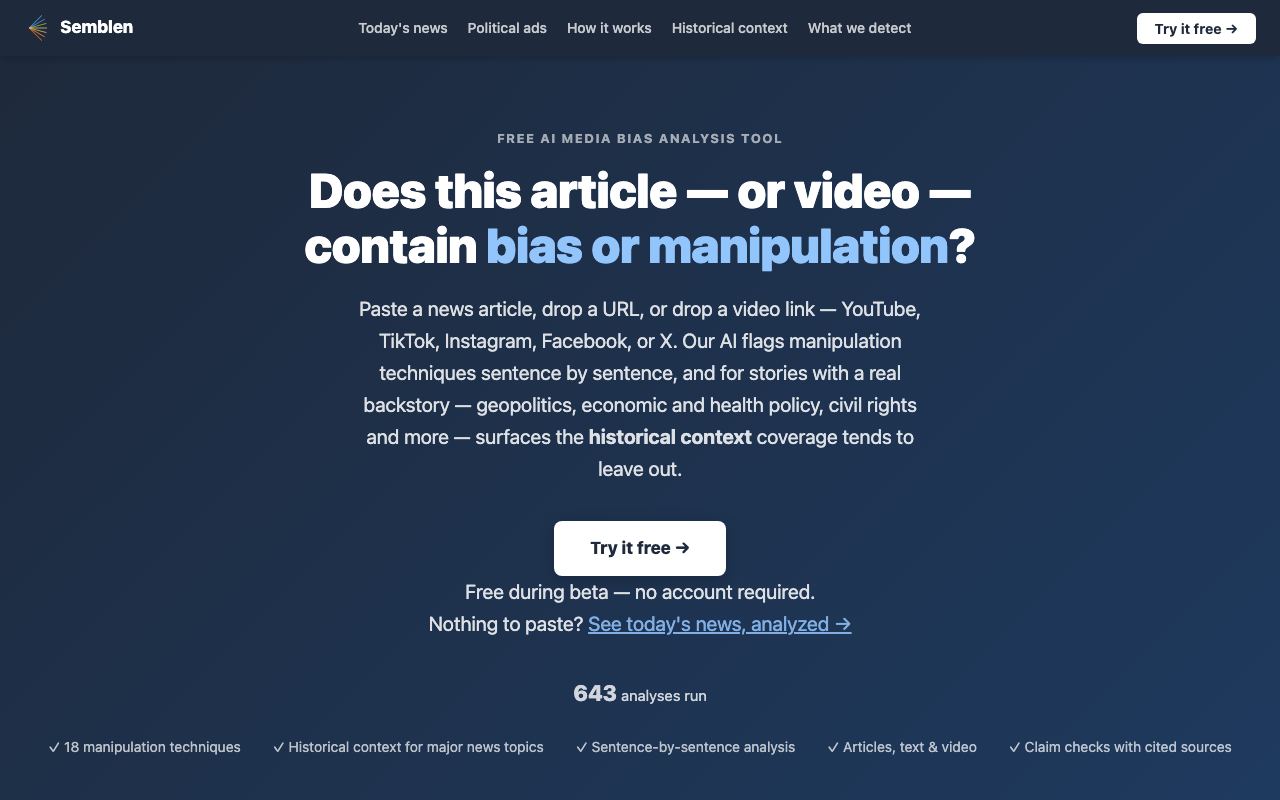
Biasly.ai is a bias detection and contextualisation tool designed to audit AI models and datasets for systematic fairness issues before deployment. The platform takes a novel approach by layering historical context onto bias detection—rather than simply flagging statistical disparities, it aims to surface whether bias patterns reflect systemic historical inequities, helping teams distinguish between expected variability and harmful skew. The tool is marketed toward data science and ML teams needing documented, defensible bias audits for regulated use cases (hiring, lending, criminal justice) or for internal responsible AI governance. The underlying approach leverages historical data to calibrate bias thresholds and contextualise findings, though specific methodologies are not detailed in public documentation. The platform appears to accept structured datasets and model prediction outputs, analyse them for disparities across protected attributes, and surface actionable findings. Whether Biasly uses techniques like fairness metrics (equalised odds, demographic parity), causal inference, or proprietary methods remains unclear. Biasly.ai emerged from a Show HN post in August 2026 and appears to be in early access. Pricing is not publicly listed, and the product is positioned as a commercial offering rather than free or freemium. It targets compliance and responsible AI teams within enterprises, and serves a genuine and growing market need: as regulation around AI transparency and fairness increases (EU AI Act, SEC guidance on AI disclosures), demand for documented bias audits has risen. Few existing tools specialise in historical contextualisation of bias; most bias detection solutions (What-If Tool, Fairness Indicators, Fiddler) focus on statistical fairness metrics without historical framing. Current limitations are significant: no published detection accuracy, no clarity on supported data types (tabular, text, images), and no guidance on how the tool handles intersectional bias (e.g., bias affecting multiple overlapping demographic groups simultaneously). It is unclear how Biasly handles fairness trade-offs (e.g., when optimising for one metric harms another) or how it supports fairness definitions beyond standard statistical measures. Documentation, case studies, and performance on large or high-dimensional datasets are absent.
Pros
- Incorporates historical context when detecting bias, moving beyond simple statistical flagging
- Designed for teams wanting to audit AI outputs and datasets before deployment
- Transparent focus on bias rather than generic model evaluation or monitoring
Cons
- Minimal public documentation on detection methods, supported data types, or accuracy metrics
- Unclear how the tool handles intersectional bias or multi-dimensional fairness trade-offs
- Very early-stage product with no visible case studies, user testimonials, or performance benchmarks
Who it is for
- Best for: Data science and ML teams auditing AI model outputs and training datasets for systematic bias before production deployment..
- Avoid if: You need a mature, widely-adopted bias detection platform with extensive case studies and proven track record in your industry..
Who this is for
Data scientists, ML engineers, and responsible AI teams at mid-to-large organisations responsible for bias auditing. Relevant for teams in regulated industries (finance, hiring, criminal justice) where bias documentation is required. Also useful for organisations building internal fairness reviews into model release processes, or teams wanting to improve transparency with stakeholders on model limitations.
Who should skip this
Small teams without dedicated data governance or ethics resources. Also skip if you need an off-the-shelf solution with established vendor support and SLAs. Avoid if your data is highly proprietary or subject to strict data residency rules, as hosting and data handling practices are not yet detailed.
Verdict
Biasly.ai addresses a real and growing need for contextualised bias auditing in ML model governance. However, extremely early-stage maturity, absent documentation on methodology, and no published case studies make it suitable only for research-minded or innovation-forward teams. Not recommended for production compliance workflows without substantial additional vendor engagement and validation.
User reviews
Real reader reviews — separate from WireTensors' own editorial rating above. Every submission is moderated before it appears here.
Loading reviews…
Write a review
Biasly.ai FAQ
What is Biasly.ai? +
Biasly.ai is a bias detection and contextualisation tool designed to audit AI models and datasets for systematic fairness issues before deployment. The platform takes a novel approach by layering historical context onto bias detection—rather than simply flagging statistical disparities, it aims to surface whether bias patterns reflect systemic historical inequities, helping teams distinguish between expected variability and harmful skew. The tool is marketed toward data science and ML teams needing documented, defensible bias audits for regulated use cases (hiring, lending, criminal justice) or for internal responsible AI governance. The underlying approach leverages historical data to calibrate bias thresholds and contextualise findings, though specific methodologies are not detailed in public documentation. The platform appears to accept structured datasets and model prediction outputs, analyse them for disparities across protected attributes, and surface actionable findings. Whether Biasly uses techniques like fairness metrics (equalised odds, demographic parity), causal inference, or proprietary methods remains unclear. Biasly.ai emerged from a Show HN post in August 2026 and appears to be in early access. Pricing is not publicly listed, and the product is positioned as a commercial offering rather than free or freemium. It targets compliance and responsible AI teams within enterprises, and serves a genuine and growing market need: as regulation around AI transparency and fairness increases (EU AI Act, SEC guidance on AI disclosures), demand for documented bias audits has risen. Few existing tools specialise in historical contextualisation of bias; most bias detection solutions (What-If Tool, Fairness Indicators, Fiddler) focus on statistical fairness metrics without historical framing. Current limitations are significant: no published detection accuracy, no clarity on supported data types (tabular, text, images), and no guidance on how the tool handles intersectional bias (e.g., bias affecting multiple overlapping demographic groups simultaneously). It is unclear how Biasly handles fairness trade-offs (e.g., when optimising for one metric harms another) or how it supports fairness definitions beyond standard statistical measures. Documentation, case studies, and performance on large or high-dimensional datasets are absent.
How much does Biasly.ai cost? +
Biasly.ai pricing: Pricing not publicly listed at time of review. Always confirm current pricing on the official site, as plans change.
Does Biasly.ai have a free tier? +
No. Biasly.ai does not offer an ongoing free plan, though a trial may be available.
What is Biasly.ai best for? +
Data science and ML teams auditing AI model outputs and training datasets for systematic bias before production deployment..
When should you avoid Biasly.ai? +
Avoid Biasly.ai if: You need a mature, widely-adopted bias detection platform with extensive case studies and proven track record in your industry..
What are the main pros of Biasly.ai? +
Incorporates historical context when detecting bias, moving beyond simple statistical flagging; Designed for teams wanting to audit AI outputs and datasets before deployment; Transparent focus on bias rather than generic model evaluation or monitoring.
What are the main cons of Biasly.ai? +
Minimal public documentation on detection methods, supported data types, or accuracy metrics; Unclear how the tool handles intersectional bias or multi-dimensional fairness trade-offs; Very early-stage product with no visible case studies, user testimonials, or performance benchmarks.
Does Biasly.ai have an affiliate program? +
No public affiliate program is listed for Biasly.ai at the time of review.
How is Biasly.ai rated? +
WireTensors rates Biasly.ai 3.6 out of 5, based on capability, value, and fit for its intended use case.
What category does Biasly.ai fall under? +
Biasly.ai is categorised under seo on WireTensors.
When was this Biasly.ai review last verified? +
This review was last verified on 2026-08-15 against the vendor's official site.
Reviewed by Arjun Mehta
Editorial lead overseeing WireTensors' research, sourcing and verification process
Last verified:
Sources
- Biasly.ai — official website — verified